The Console is a key feature in DataBee that allows you to create, customize, and manage dashboards tailored to your needs. It provides a centralized, high-level view of your environment, enabling you to monitor key metrics, track health and performance, identify trends, and gain actionable insights through configurable components and visualizations.
DataBee includes dedicated console experiences for the following domains:
Data: Monitor data ingestion, feed health, data quality, and other operational metrics to ensure the reliability of your data pipeline.
Controls: Track control coverage, effectiveness, and compliance-related metrics to help assess your organization's security posture.
Security: Analyze security findings, threats, and entity-based insights to identify and prioritize risks.
Inventory: Gain visibility into devices, applications, vulnerabilities, and other assets across your environment.
This article explains how to create, edit, duplicate, and delete consoles, add widgets to customize dashboards, and understand the built-in console pages available across the Data, Controls, and Security domains.
Manage Console
Click on the Manage Console button at the top right, from Data, Security or Inventory pages. It displays a dropdown that allows you to create, duplicate, edit, delete console.
Note:
The Manage Console actions such as delete console or widget edits apply only to console pages you have created. The built-in DataBee console pages cannot be edited or deleted.

Built-in Console Pages | Custom Console Pages | |
|---|---|---|
Provided by DataBee | ✓ | — |
Created by your organization | — | ✓ |
Editable | — | ✓ |
Deletable | — | ✓ |
Linked to DataBee compliance views | ✓ | — |
Create Console
You can create a new console page from any of these pages- Data, Security or Inventory. Here, you can find the configured console pages as well as the built-in console.
The time range filter at the top right lets you select a time frame for displaying the data. For example, choosing Past 1 Week updates all components to show data from the last seven days.
Click the Refresh icon to update the console widgets with the latest data.
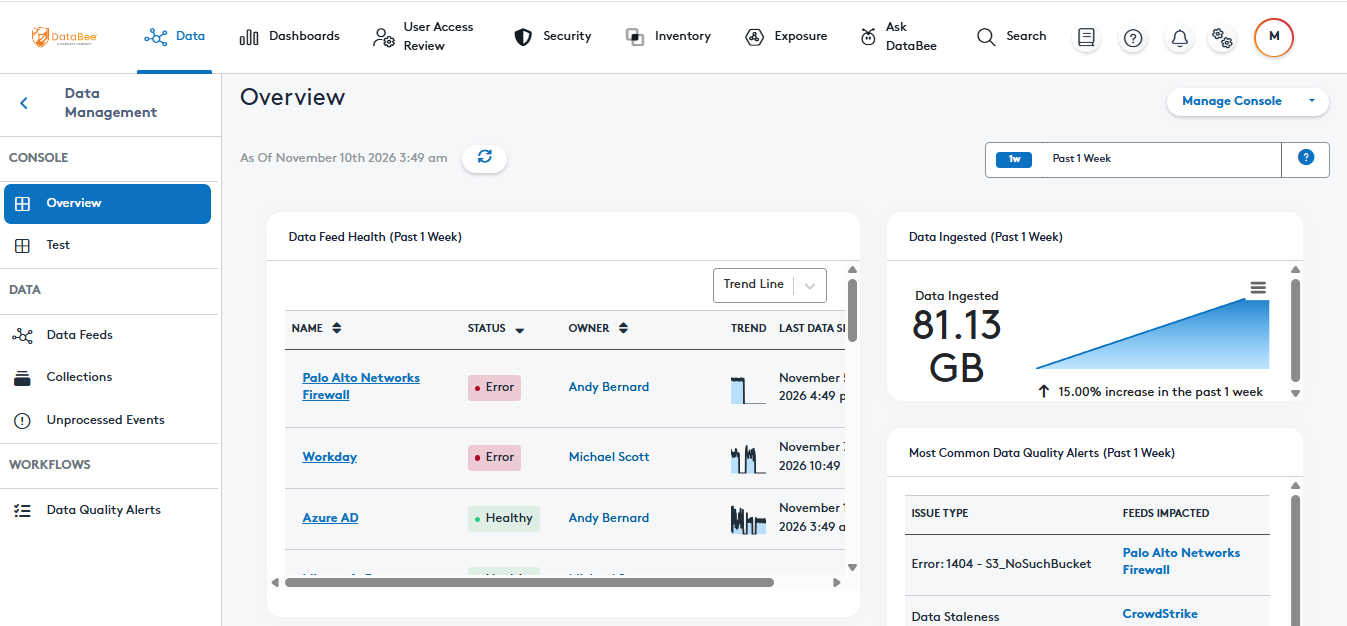
To create a new console, click on the Create Console button under the Manage Console dropdown. An option dialog box will appear
Name: enter a name for the console
Time Range: Select the preferred time frame from the dropdown. The chosen global time range applies to the entire console and will be used by any component that does not have a specific time range set.
Section: select a top navigation section from the drop-down list where you want to include the console page you are creating.
Make Default: If you want to make this console your default one, check the 'Make Default' checkbox. Please note that checking this box will replace any prior default console you may have configured.
Click on the Create button to create your new console.
To find your newly created console, click the Data, Controls, Security, or Inventory tab in the top navigation bar, depending on the section you selected when creating the console. Then, locate the console in the left-hand navigation menu. By default, the newly created console will be empty, but you can easily customize it by adding components and arranging them to fit your needs.

Components
You can add a component by clicking on the + Add Widget button.

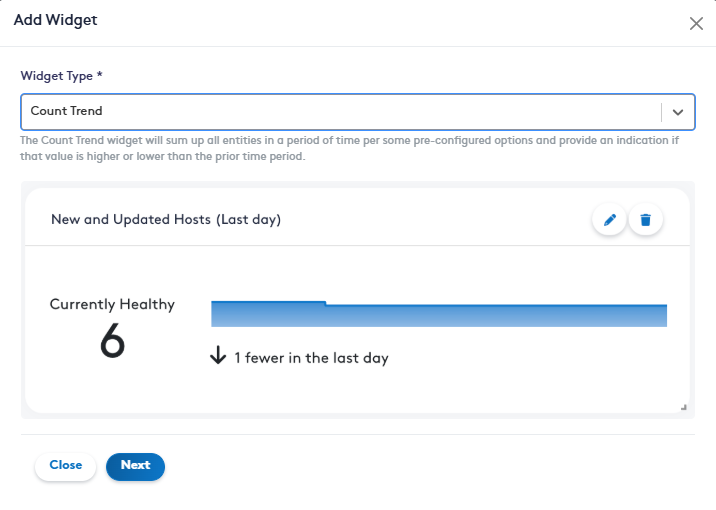
This will take you to the Add Widget option dialog box. You can select the preferred component type, from the 'Component Type' drop-down list.
Component type | Description |
|---|---|
Count Trend | a large single number display showing the latest value for the count of a field and its trend over the last seven days. You can select the desired time frame (hour, day, week, or month). |
Enumerated Activity Field | a horizontal, vertical, or pie chart visualization that sums all values of a selected enum field in a chosen OCSF activity table. |
Feed Health | an overview table showing the health of all data feeds. |
Field Graph | line or bar graph showing how many records match the configured query over time. |
Finding Threat Overview | a bar graph that displays all findings from the selected Findings activity in OCSF within the chosen time period, filtered by an optional query. |
Header | a full-screen width visual divider that can be used to section the console page. |
Security Findings By Entity | a graphical display of the number of Security Findings over time divided by User and Device. |
Statistics | the top ten list of high-interest items. |
Vulnerability Statistics | an overview table that displays the number of vulnerabilities, filtered by entity types and severity IDs. |
You can click on each component type to read a brief description and also get a preview before selecting it for your console. To know more on each component check out the articles under the Components folder. After selecting the component type, click on the Next button.
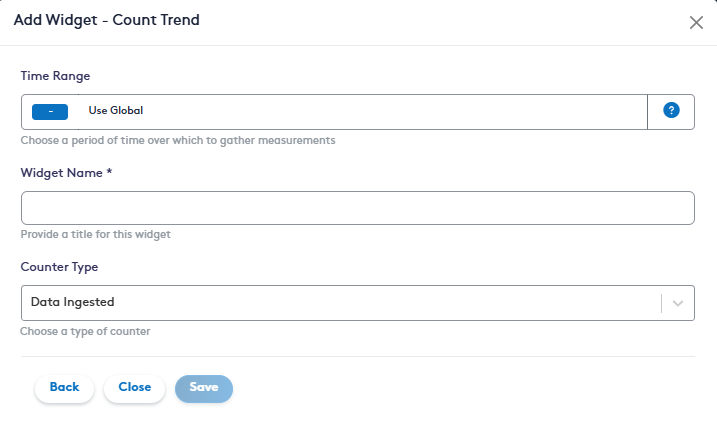
Depending on the component type you have chosen, you will be presented with specific data fields that are relevant to that particular component type. Fill in the required fields with the appropriate data and then click on the Save button.
After adding a component, the Console page will display a visual representation of the data in the form of a pictorial or graphical element. This allows you to quickly and easily view and analyze your data at a glance, and identify trends, patterns, and anomalies, enabling you to make informed decisions and take appropriate actions based on the information presented. You can resize components by dragging the arrow located at the bottom right corner of each component. You can also rearrange components effortlessly through the drag-and-drop functionality.
To edit the component of a console, select the console you wish to edit from the Console left-hand navigation menu. Click on the edit icon located at the top right of each component, make the required edits, and click on the Save button to save the changes.
To delete the component of a console, select the console you wish to delete from the Console left-hand navigation menu. Click on the delete icon located at the top right corner of each component. A confirmation dialog box will appear asking if you are sure you want to delete the component. Click on the Yes button to permanently delete the component.

This product includes GeoLite2 data created by MaxMind, available from https://www.maxmind.com.
Duplicate Console
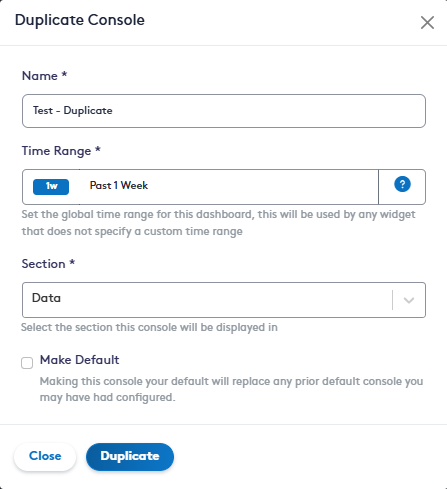
To duplicate an existing console, select the console you want to duplicate from the Console left-hand navigation menu. Click the Manage Console dropdown button and select Duplicate Console. Enter a name for the duplicated console, make any required changes, and click the Duplicate button to create the duplicate console.
Edit Console
To edit an existing console, select the console you wish to edit from the Console left-hand navigation menu. Click on the Manage Console dropdown button and select Edit Console. Make the required edits and click on the Save button to save the changes.

Delete Console
To delete an existing console, select the console you wish to delete from the Console left-hand navigation menu. Click on the Manage Console dropdown button and select Delete Console. Click on the Delete button to permanently delete the console.
Note:
Deleting the console will also remove all components configured within it.

Built-in Console pages
Data Console
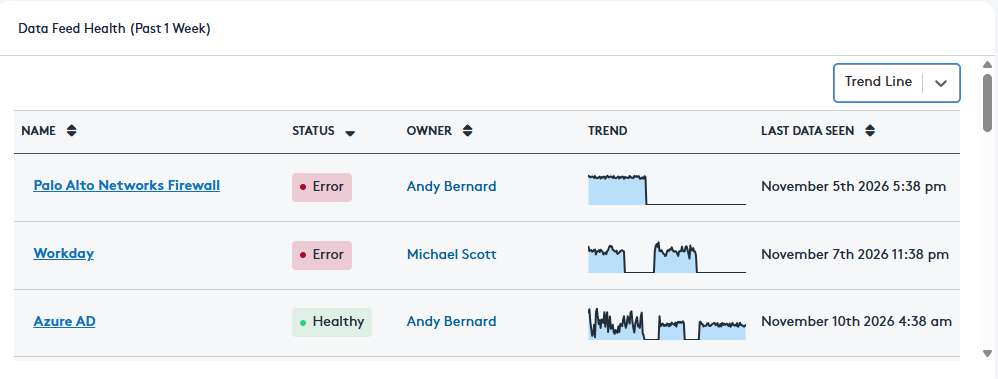
Data Feed Health (Past 1 Week)
This widget provides a weekly overview of data feed health and quality. Users can switch between Trend Line and Data Quality views to monitor feed performance, identify ingestion issues, and assess data quality.
Trend Line View: Displays feed status, owner, activity trends over the last 7 days, and the last time data was received.
Data Quality View: Shows feed status, owner, percentages of successful, failed, and unmapped records, along with the last data received timestamp.
Use this widget to quickly detect feed disruptions, data quality issues, and feeds that may require attention.
Data Ingested (Past 1 Week)
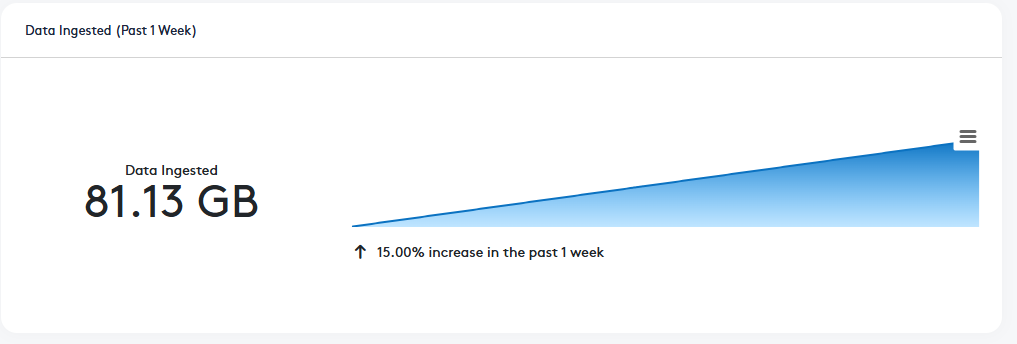
This widget displays the total volume of data ingested over the last seven days, along with a trend chart showing ingestion patterns over time. It also highlights the percentage increase or decrease compared to the previous week, helping users monitor data growth and identify significant changes in ingestion activity.
Users can access additional chart options to view the chart in full-screen mode, print the chart, or download it as PNG, JPEG, SVG, or PDF for reporting and analysis purposes.
Use this widget to track data volume trends, measure ingestion performance, and quickly identify unusual spikes or drops in incoming data.
Security Console
Inventory Console
DataBee’s Exposure Management Console provides quick insights into the assets in your environment and the vulnerabilities associated with those assets. Navigate to the Exposure tab on the DataBee platform’s header. From the left-hand navigation menu, select Exposure Management.
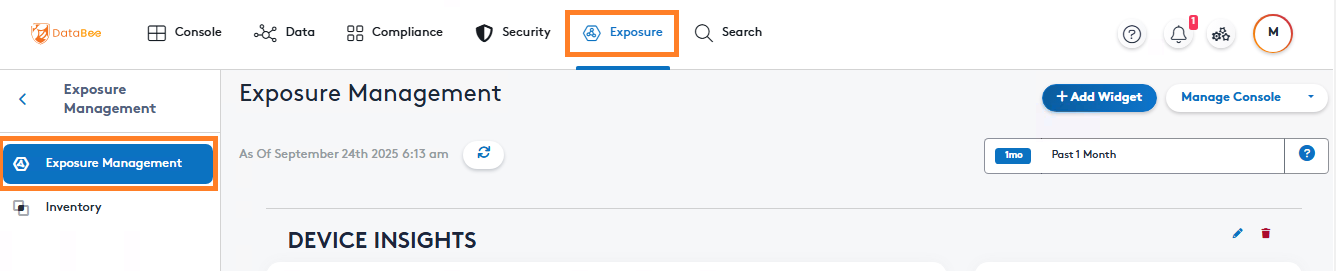
It is broken up into three sections: Device Insights, Application Insights, and Vulnerability Insights.
Device Insights
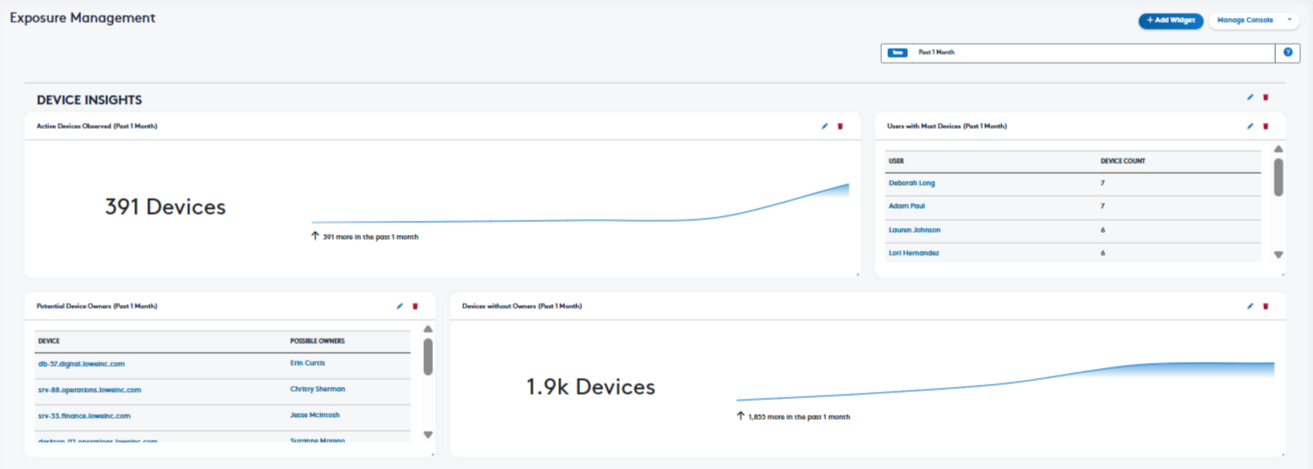
The Device Insights section in DataBee’s Exposure Management Console provides accurate insights into the assets in your environment and helps to keep your device inventory up-to-date and contextualized. Bringing clarity about devices in your environment enables your business to enhance its security coverage, reduce manual processes, increase alert accuracy, and more rapidly identify owners of orphaned devices.
Active Devices Observed
The Active Devices Observed widget reports the count of active device(s) observed by DataBee’s Entity Resolution over the chosen time period in the past. Entity Resolution should begin observing devices within 1 hour of ingesting data from any of the configured data sources for Entity Resolution. Hovering over the points in the graph will give you specific details regarding the count of active devices, date, and time.

Users with Most Devices
The Users with Most Devices widget reports the users, and the corresponding device count associated with that user over the chosen time period in the past. Entity Resolution begins observing users and devices within 1 hour of ingesting data from data sources that provide ownership information such as a CMDB.

Potential Device Owners
The Potential Device Owners widget reports the devices and their possible owners over the chosen time period in the past. Potential owners are determined using DataBee’s owner discovery feature. Additional details about the device or the owners may be reviewed by clicking on the respective names.

Devices without Owners
The Devices without Owners widget reports the total number of active devices without an owner association over the chosen time period in the past. The widget also indicates whether this number is increasing/decreasing and by how much.

Application Insights
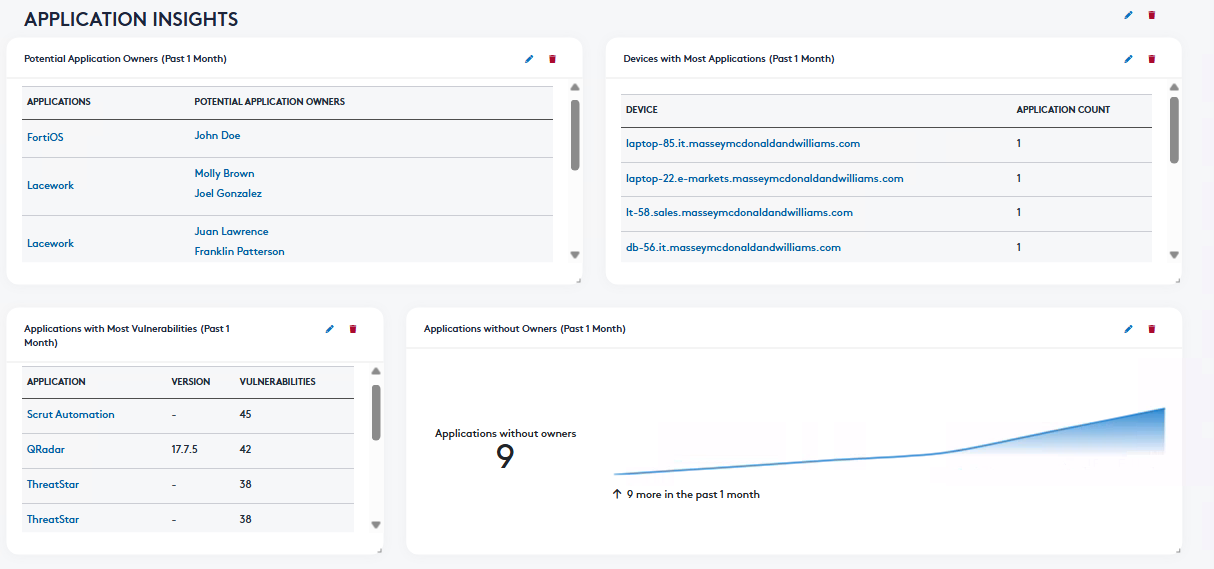
The Application Insights section in DataBee’s Exposure Management Console allows for more accurate insights into the applications in your environment and helps to keep your application inventory up-to-date and contextualized. Bringing clarity about applications in your environment enables your business to enhance its security coverage, reduces manual processes, increases alerts’ accuracy, and more rapidly identify owners of orphaned and/or vulnerable applications.
Potential Application Owners
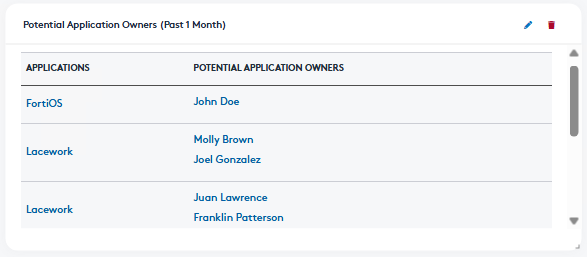
The Potential Application Owners widget leverages DataBee’s Entity Resolution to suggest possible owners for unassigned applications. Entity Resolution logically assigns potential owners based on factors such as associated devices and user interactions. Additional details about the application or the owners may be reviewed by clicking on the respective names.
Devices with Most Applications
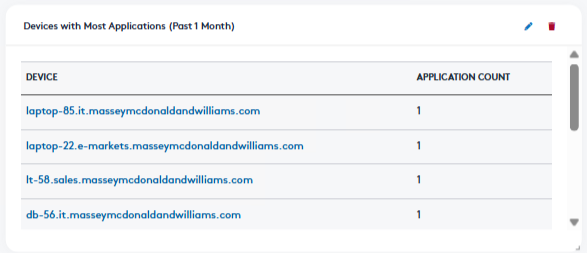
The Devices with Most Applications widget conveys the devices running the highest number of applications. This widget can provide visibility into where risk may be concentrated in your organization. For example, if a device hosts significantly more applications than most, one may wish to take priority in ensuring that device receives patches.
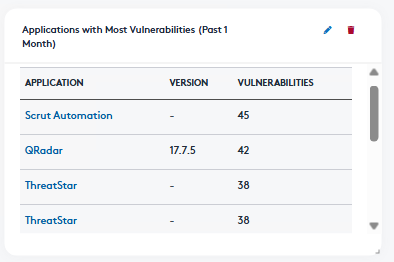
Applications with Most Vulnerabilities
The Applications with Most Vulnerabilities widget conveys which applications have the highest count of un-remediated vulnerabilities. This can assist in the effective prioritization of remediation as well as understanding where risk may be concentrated in your environment.
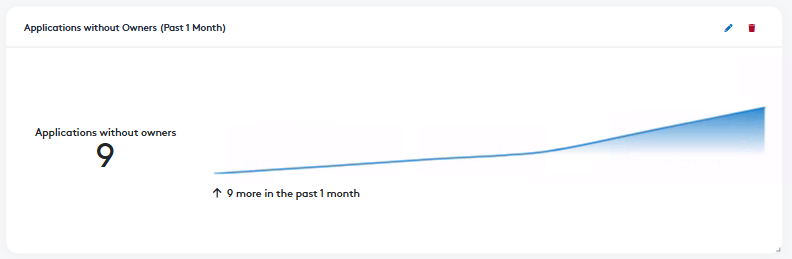
Applications without Owners
The Applications without Owners widget reports the total number of active devices without an owner association over the chosen time period in the past. The widget also indicates whether this number is increasing/decreasing and by how much.